Cataract Treatment

What do you understand by Cataract?
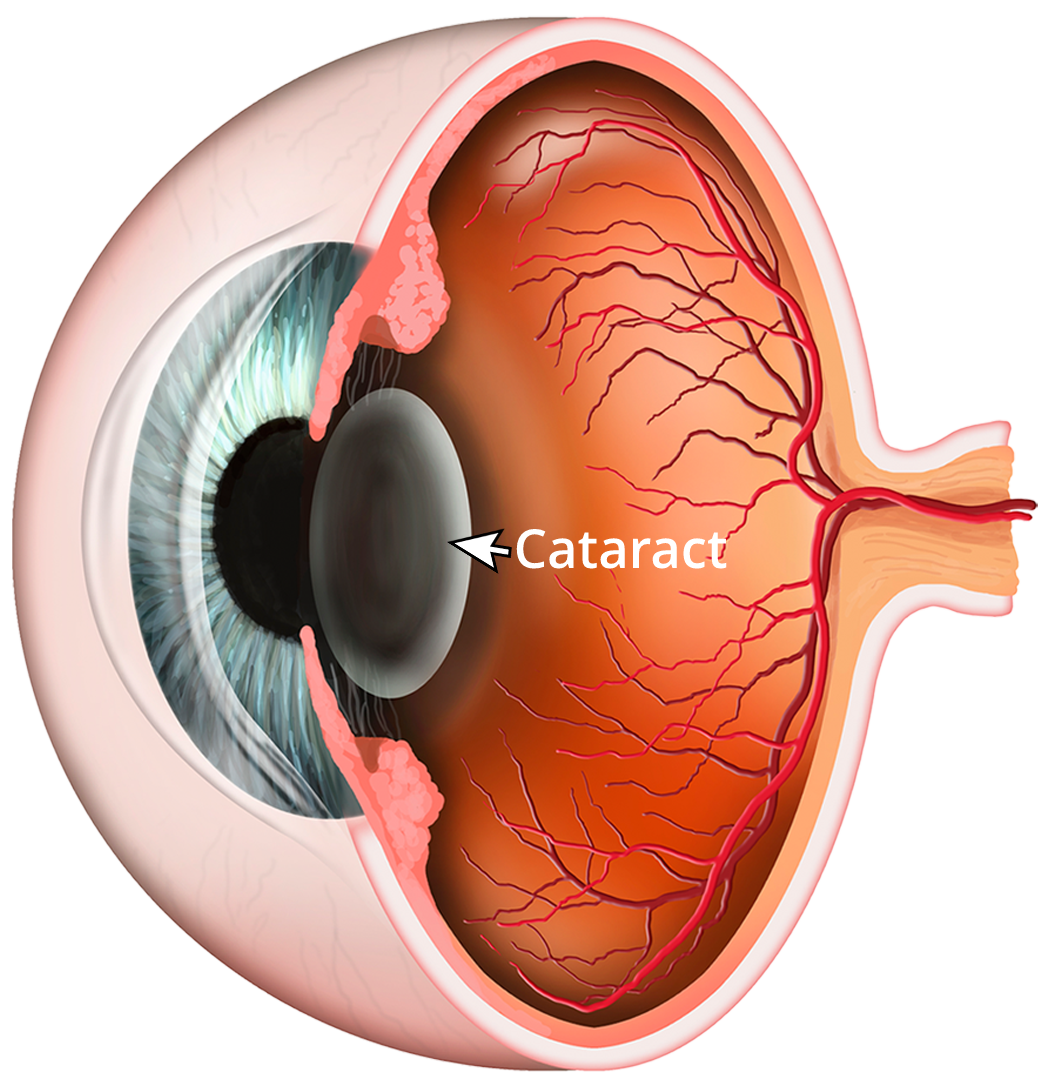
A cataract is an eye condition characterized by the clouding of the natural lens in the eye, leading to vision loss. Normally, the lens is clear and allows light to pass through, focusing on the retina. When a cataract develops, the lens becomes cloudy and interferes with normal vision.
Cataracts typically develop slowly and can affect one or both eyes. Symptoms may include faded colors, blurry vision, halos around light, trouble with bright lights, and trouble seeing at night.
Types of Cataract
Nuclear Cataracts
Form in the central part of the lens and are most commonly associated with aging.
Cortical Cataracts
Develop in the lens cortex and appear as wedge-shaped opacities that start at the periphery.
Posterior Subcapsular Cataracts
Affect the back of the lens and often interfere with reading vision and cause glare.
Congenital Cataracts
Present at birth, often due to genetics, infection, or trauma during pregnancy.
Traumatic Cataracts
Result from eye injury, which can develop immediately or years after the trauma.
Secondary Cataracts
Develop as complications of other medical conditions like diabetes or steroid use.
Treatments for Cataract
Surgical Options:
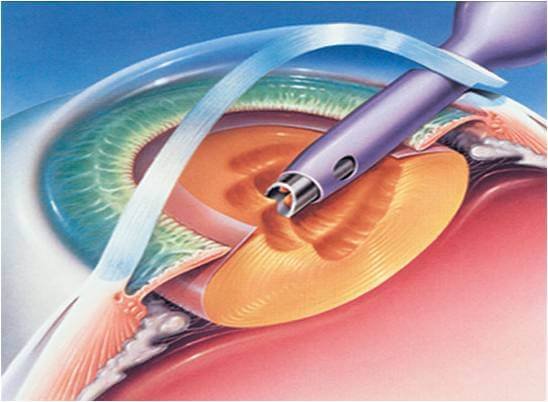
Phacoemulsification
The most common modern technique using ultrasound energy to break the cloudy lens into small pieces that are then removed.
SICS & MICS
Small Incision Cataract surgery & Micro Incision Cataract Surgery
Intraocular Lens (IOL) Options:
Monofocal IOL
Provides clear vision at one distance (near, intermediate, or far)
Multifocal IOL
Provides clear vision at multiple distances, reducing need for glasses
Toric IOL
Corrects astigmatism as well as cataracts
EDOF
Extended Depth of Focus
Laser-Assisted Cataract Surgery:
Advanced femtosecond laser creates precise incisions, fragments the cloudy lens, and enhances accuracy for better recovery and visual outcomes.
Advanced Technology
Advanced Phaco System
High-speed ultrasound with customizable settings and enhanced safety for precise cataract surgery. Our state-of-the-art phacoemulsification system allows for smaller incisions and faster recovery.